$25.8
$50.05
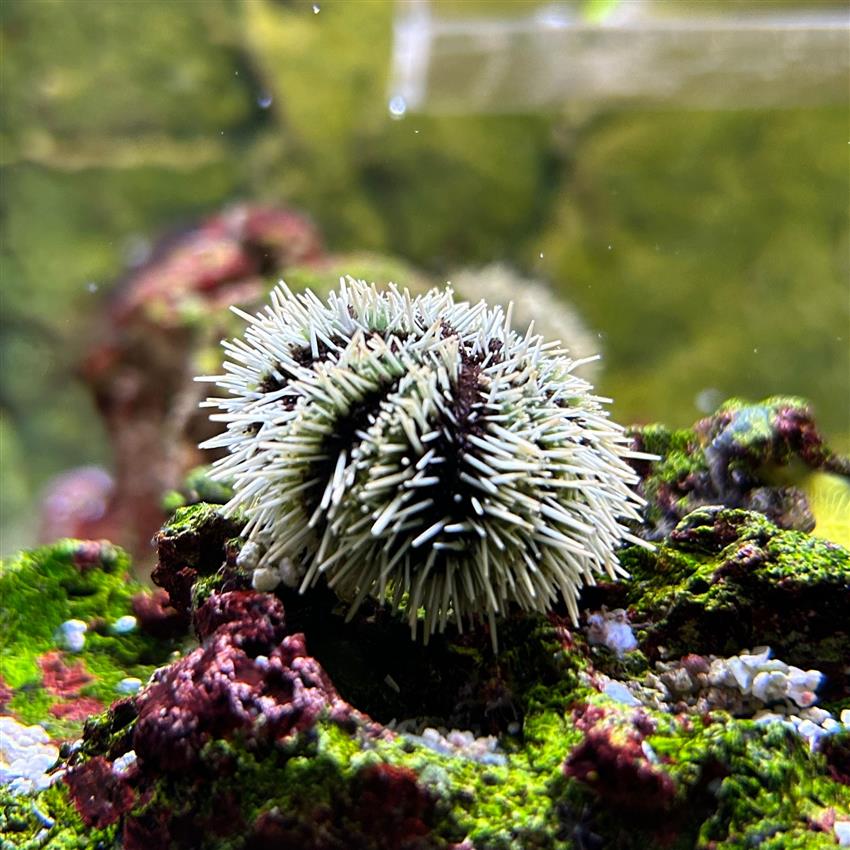
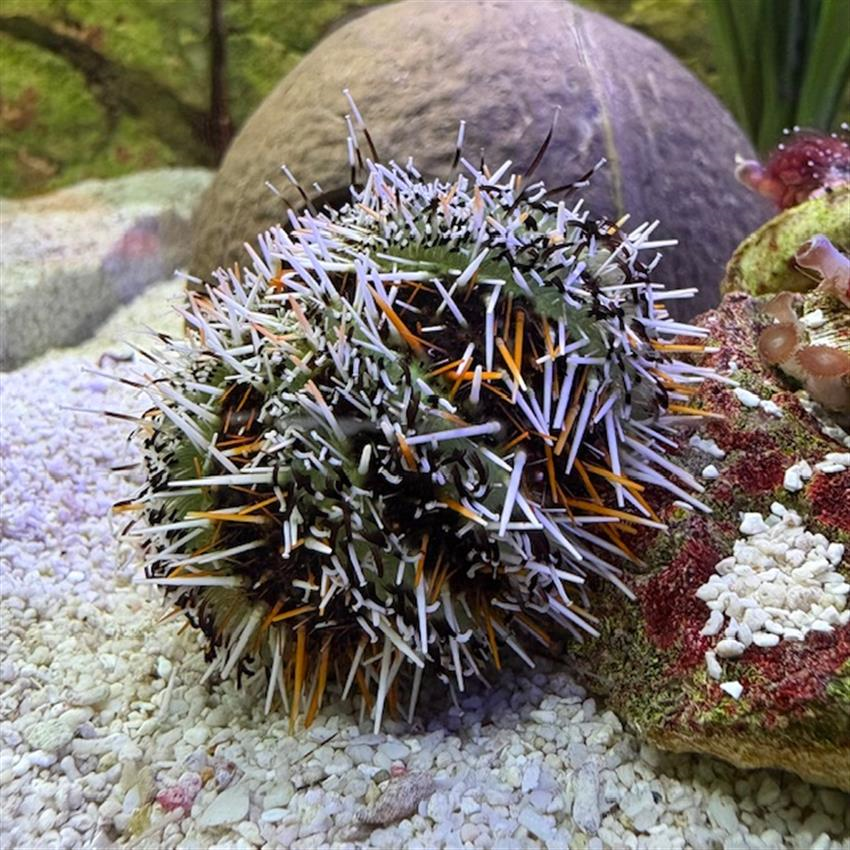
Tank Bred Tuxedo Urchins, Mespilia globulus, can also go by the name Globe or Globular Urchin. These are a species of sea urchin belonging to the family Toxopneustidae. They have a spherical body covered in long, slender spines. Their colouration is characterized by alternating bands of dark brown or black and light tan or white, giving them a striking tuxedo-like appearance. The contrast between these colours makes them visually appealing and sought after in marine aquariums. These urchins typically reach sizes of around 3 to 4 inches (7.5 to 10 centimetres) in diameter, although they can grow larger under optimal conditions. These particular urchins are tank bred so will be alot smaller. Why Keep Tuxedo Urchin Tank Bred Tuxedo Urchins are important members of marine ecosystems, contributing to nutrient cycling and ecosystem health. Their grazing activities help to prevent overgrowth of algae, which can smother coral reefs and compete with other marine organisms for space and resources. This ecological niche means they are very useful as they are part of the marine clean up crew. Urchins are also very interesting to keep which may sound surprising. They will carry objects around with them. Gripping them with there tube feet (the filamentous legs you see between the spines. These are essentially the urchins hands and feet they use to drag themselves around with). It is fun to see how they decorate themselves or you can give them objects to travel with. Why not give your urchin its very own hat? Taxonomy This classification system categorises the Tuxedo Urchins within the broader group of animals known as Echinoderms, which also includes sea stars, sea cucumbers, and brittle stars. Echinoderms typically exhibit radial symmetry, meaning their body parts are arranged around a central axis, often in multiples of five. The name echinoderm means spiny skin which refers to the endoskeleton that provides support and protection for the animal’s soft internal organs. Within the class Echinoidea, it falls under the order Camarodonta, which includes most of the species of sea urchins. The Tuxedo Urchin specifically belongs to the family Toxopneustidae, which consists of various sea urchin species with globular bodies covered in long spines. Finally, it is classified under the genus Mespilia and the species globulus, denoting its unique species within the genus Mespilia. Natural Habitat These urchins are tank bred so have been reared in captivity. In the wild, Tuxedo Urchins are native to the Indo-Pacific, where they can be found in tropical and subtropical waters. Their range extends from East Africa and the Red Sea across the Indian Ocean to the Pacific Ocean, including regions such as the Philippines, Indonesia, Papua New Guinea, Australia, and various island nations in the Pacific. Within their range, Tuxedo Urchins inhabit shallow coastal waters, typically at depths ranging from intertidal zones to around 100 feet (30 meters). They are often encountered in areas with rocky outcrops, coral reefs, and patches of seagrass or algae. These urchins are herbivores, primarily feeding on algae that grow on rocks, coral, and other substrates. As such, they are often found in habitats with abundant algal growth, where they can graze on a variety of algae species. Keeping Tuxedo Urchin Tank Bred Healthy As a herbivore, urchins require access to algae. This means that they are only suitable for mature tanks with plenty of growth. If the tank to too sparse then they will need to be fed seaweed that can be secured to the tank with clips. Urchins can eat coralline algae so might not be best if you are particularly fond of it. Suitable Tank Mates Tuxedo Urchins are peaceful but do like to carry things around with them. Make sure things like frags and thermometers are secured to surfaces so your urchin can not run off with them. Urchins can eat coralline algae so might not be best in tanks if you prefer to keep a cover of it. Large predatory fish such as triggers, puffers, parrotfish and wrasse could pose as a threat to urchins. How Many Should You Keep It is possible to keep more than one urchin in the same tank. The number largely depends on how large the tank is and how much food there is available. If you want a group but are unsure, feel free to give us a call or visit us instore. Lighting Preference Tuxedo Urchins will be happy in a wide range or light conditions. Summary Tuxedo Urchins Tank Bred, scientifically referred to as Mespilia globulus, are striking sea creatures belonging to the family Toxopneustidae, renowned for their spherical bodies covered in alternating bands of dark brown or black and light tan or white, resembling tuxedos. These herbivores are crucial for nutrient cycling and ecosystem health in marine environments, often sought after for their algae-grazing activities, which prevent overgrowth that can threaten coral reefs. Their intriguing behaviours, including carrying objects with their tube feet, add an entertaining element to aquariums. Taxonomically classified within Echinoderms, specifically the class Echinoidea and order Camarodonta, they play a significant role in maintaining balance within marine ecosystems. Native to the Indo-Pacific, they inhabit shallow coastal waters with rocky outcrops and coral reefs, primarily feeding on algae. In aquariums, they require mature tanks with abundant algae growth or supplemental feeding. Compatible tank mates include peaceful species, but caution is advised with large predatory fish. The number of urchins to keep depends on tank size and food availability, with a wide lighting range suitable for their habitat preferences.
Saltwater Critters