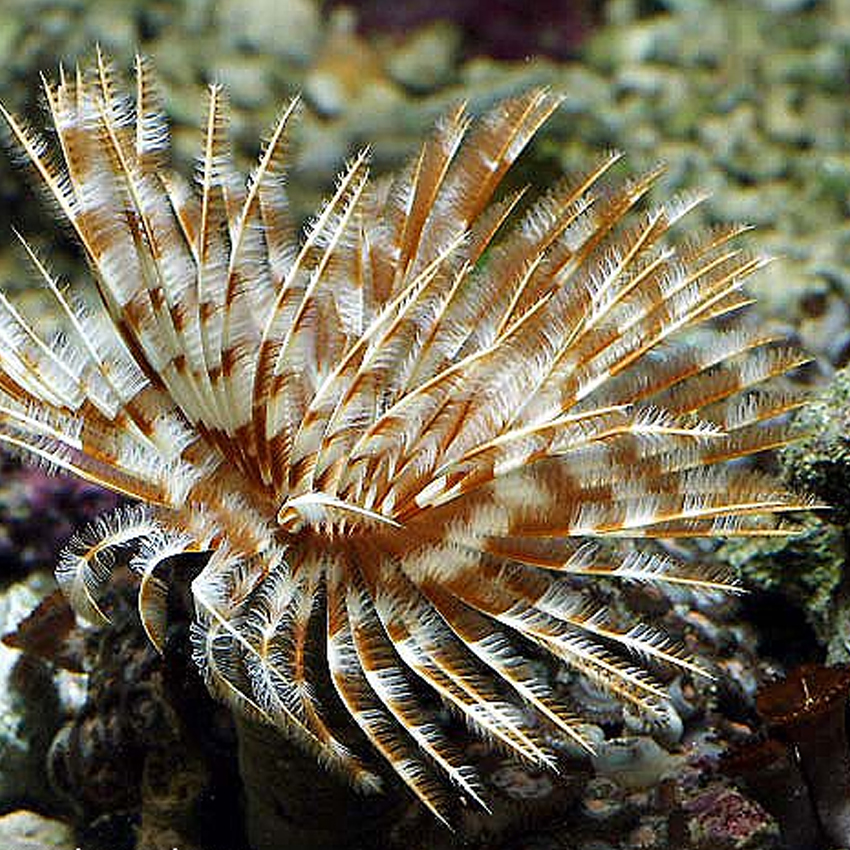
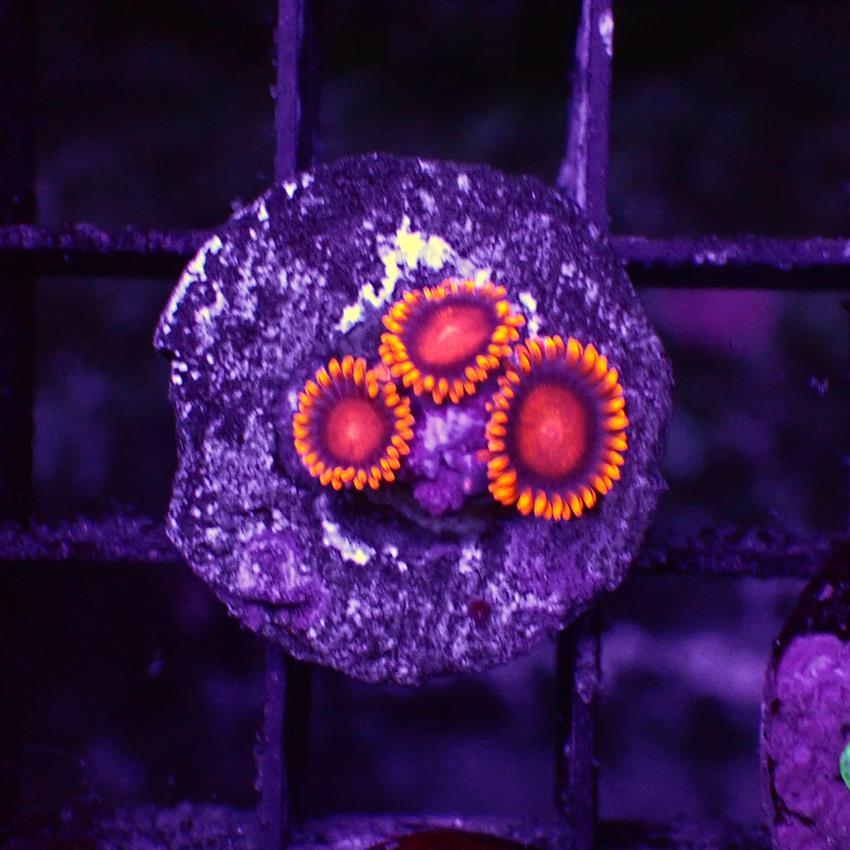
The Mocha and White Feather Duster, (Sabellastarte sp) or Fan Worm, boasts an elegant, tube-like structure with a stunning display of feather-like radioles that extend from its opening. These radioles, which can vary in shades of mocha and white, form a fan-shaped crown that sways gracefully in the water. When threatened, the feather duster quickly retracts its crown into its protective tube, which is typically anchored in the substrate or among rocks. Why Do People Like to Keep Them? Feather dusters are a favourite among aquarium enthusiasts due to their unique and mesmerizing appearance. Their delicate, flowing crowns add a touch of natural beauty and elegance to any marine setup. Beyond their visual appeal, feather dusters also play a beneficial role in the tank ecosystem by filtering out dissolved organic matter and plankton, helping to maintain water clarity and quality. Taxonomy Belonging to the family Sabellidae, the Mocha and White Feather Duster is part of the Sabellastarte genus. These marine polychaete worms are known for their distinctive feather-like appendages used for feeding and respiration. Natural Habitat and Distribution. Feather dusters are commonly found in tropical and subtropical marine environments around the world. They thrive in arocky areas as well as sandy or muddy substrates where they can build their tubes. Their natural distribution includes coral reefs and coastal regions, where they can anchor themselves securely. they can also be found between corals or in crevices. Keeping Mocha and White Feather Dusters Healthy. Avoid copper-based medications and ensure water parameters are within the appropriate range for marine invertebrates. To ensure the health of feather dusters, it is crucial to maintain stable water conditions with moderate to high water flow to aid in their filter feeding. They prefer tanks with a mature biological system so they are able to feed. Regular supplementation of phytoplankton and other microscopic foods, such as coral food, can be helpful to meet their dietary needs. You can target feed them with a pipette or coral feeder if supplementing them. Feather dusters feed by extending their radioles into the water column to capture suspended particles. The collected food is then transported to their mouth via ciliary action. To build their protective tube, feather dusters secrete mucus and collect fine sediment, sand, and detritus, which hardens to form a sturdy structure that shields them from predators and environmental stresses. Suitable Tank Mates. Mocha and White Feather Duster dusters are peaceful and compatible with a variety of reef-safe tank mates. They coexist well with corals, small fish, and other non-aggressive invertebrates. However, caution should be taken when housing them with large predatory fish or invertebrates that may see them as prey or disturb their tubes. How Many Can I Keep? The number of feather dusters you can keep depends on the size of your aquarium and the availability of suitable feeding sources. In general, a moderate-sized tank can accommodate several feather dusters, provided there is enough space for them to establish their tubes without overcrowding. It’s essential to ensure each feather duster has adequate access to food and water flow. For specific recommendations based on your tank setup, consult with an aquarium specialist. Summary. The Mocha and White Feather Duster (Sabellastarte spp.) features an elegant, tube-like structure with stunning feather-like radioles in mocha and white hues that form a graceful, fan-shaped crown. Aquarium enthusiasts value them for their mesmerizing appearance and their role in maintaining water clarity by filtering out dissolved organic matter and plankton. Part of the Sabellidae family, these marine polychaete worms thrive in tropical and subtropical environments with live rock and sandy or muddy substrates. To keep them healthy, ensure stable water conditions, avoid copper-based medications, and provide regular phytoplankton supplements. Feather dusters peacefully coexist with corals, small fish, and non-aggressive invertebrates, but should be protected from large predators. The number of feather dusters suitable for your tank depends on its size and food availability, with adequate space and water flow being essential for their well-being.