$18.07
$31.62
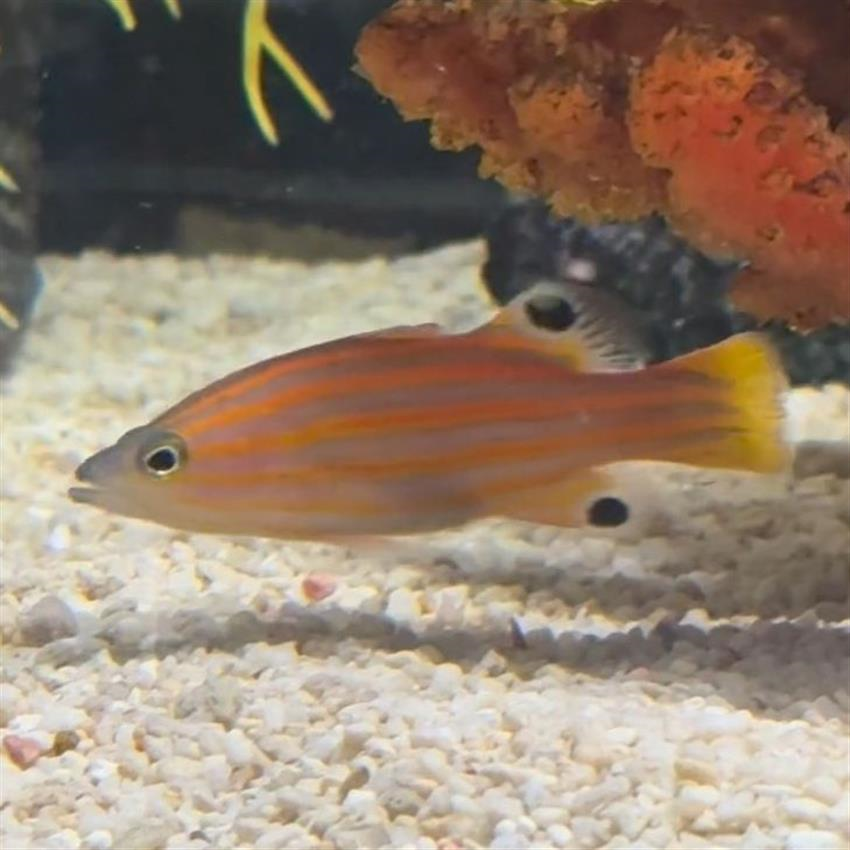
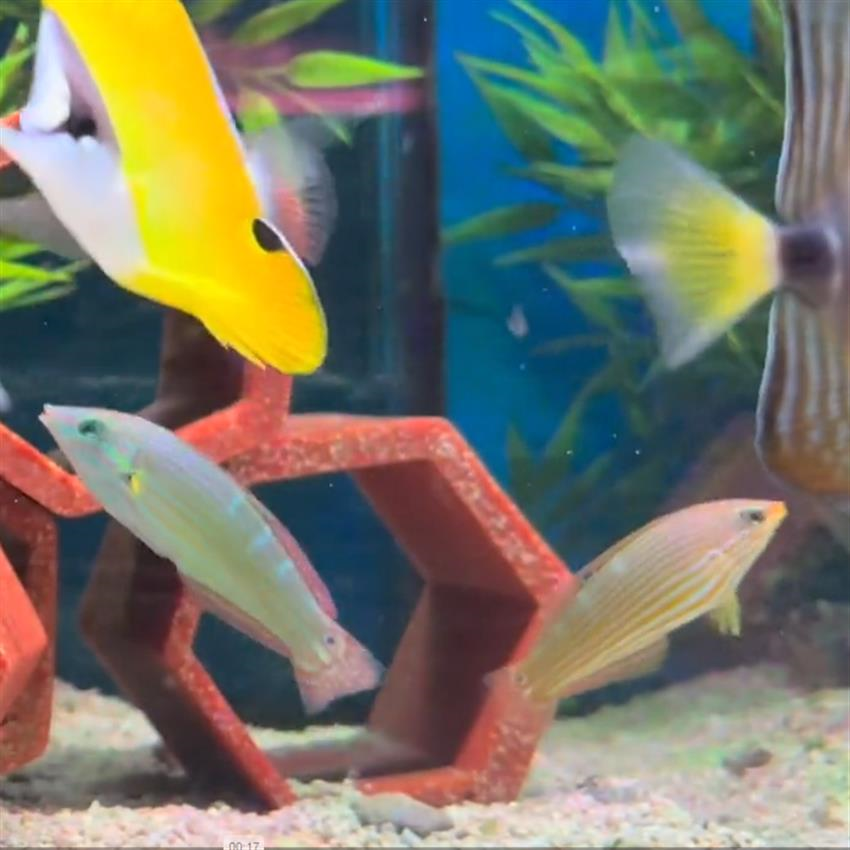
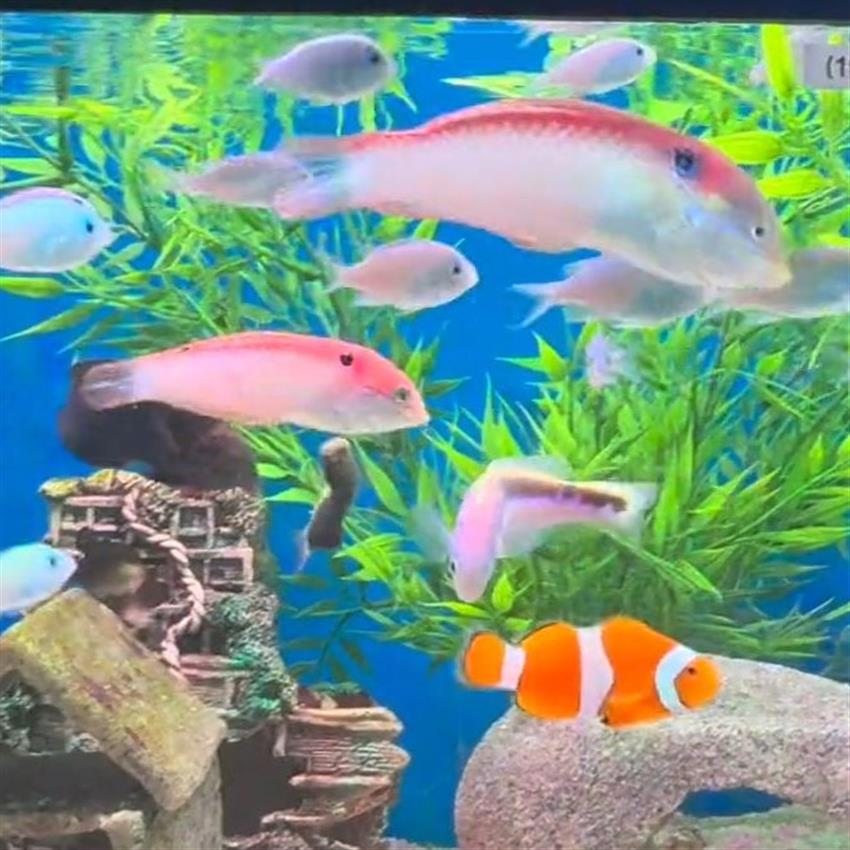
Vivien’s Leopard Wrasse, (Macropharyngodon vivienae) also goes by the name Madagascar Wrasse. This is a strikingly beautiful reef fish known for its vibrant colouration. Males typically display a vivid pink backs with bright spots that give the species its common name. Females and juveniles are generally more subdued in colour, often exhibiting softer shades with less distinct markings. Macropharyngodon wrasse are found in the tropics and are all known as leopard wrasse. The etymology for the genus is ‘big throat teeth’, due to the large molar and canines hidden deep in their throat. Vivien’s Leopard Wrasse, Macropharyngodon vivienae Ecology. These fish live around South Africa and Madagascar in the Western Indian Ocean. They live in a mix of sheltered habitats, such as coral reefs, lagoons, sandy or rocky areas. The complex structures help the wrasse avoid predation. Failing that, Vivien’s Leopard Wrasse quickly vanish by burying themselves in the sand bed. These fish feed on shelled plankton, like foraminifera, Arthropods and snails. Their diet could make them candidates for controlling some pests, please give us a ring to discuss if interested. These Wrasse live in social groups with one top male to a few or more females. Vivien’s Leopard Wrasse are also protogynous hermaphrodites. Which means when the dominant male perishes, the largest female in the group will turn male. It will then become the new boss male. As a result, all juvenile Leopard Wrasse, are in fact immature females. Vivien’s Leopard Wrasse in the Aquarium. It is important to imitate the natural environment by providing plenty of nooks and crannies for the wrasse to hide in. Hobbyists should invest in a jump guard to prevent any unfortunate mishaps. Vivien’s Leopard Wrasse do best when fed a varied diet. They will accept enriched frozen mysis shrimp and enriched frozen brine shrimp. We enrich all our frozen food with garlic and vitamins. These are great for keeping fish healthy by providing them with the nutrition otherwise lost in frozen food. In doing so, these additives support their immune system and increase longevity. They will also devour live foods, such as copepods and amphipods, that can be cultivated in attached refugium. Over time they will accept high-quality pellet or flake. We adapt all our wrasse to aquarium life before they leave us. We focus on their health, and most are eating a good quality flake food and/or pellet, before being offered for sale. Receiving Vivien’s Leopard Wrasse via specialist licensed livestock courier. When it comes to showing distress, some fish don’t let on, while others wear their heart on their sleeves. The Vivien’s Leopard Wrasse, is one of those more dramatic fish. Here at the Abyss, we pride ourselves on our reputation for providing healthy livestock, that are well accustomed to life in the home aquarium. We have a very rigorous process for preparing our livestock for sale and a thorough packing process to help ensure our customers receive fish to be proud of. When it comes to shipping out, no expense is spared to ensure the safety and comfort of our stock while they are on the way to you. Even so, It is important to remember that, being brought home the same day from your local fish store, is a very different experience from being sealed in complete and true darkness, then travelling overnight. For example, the simple action of lifting your new pet into a lit environment, from the pitch black can be a shock to them. Remember, they don’t have eye lids to shield themselves. As a result, it is entirely likely you may see some species demonstrate odd behaviour or strange patterns. These are all natural behaviours for this Wrasse. Either by being basic responses (ie, breathing faster due to increased heart rate), or an adaptation to help aid survival in the wild (ie, colour change to help camouflage or even staying completely motionless and limp, allowing the currents to sweep them away like debris. Hiding in plain sight strategy). There are some people that may find this alarming. Especially if new to receiving fish via a specialized licensed courier service, or are new to Wrasse, so below are somethings you may encounter on delivery. If you see your Vivien’s Leopard Wrasse: Heavy breathing, Irregular breathing Lying on its side, or bottom of the bag, motionless or limp, Keeling over as the bag is adjusted, (making no effort to self support in an attempt to go undetected) Lying on the side with tail or body curled, Displaying darker colours, Displaying a mottled, or striped pattern, Do not panic! Follow the instructions in the guarantee provided. Get in touch if you are concerned. Upon release, your Wrasse will most likely want to hide or at least stay inconspicuous by remaining motionless. Hiding is generally either by burying themselves or finding a nice cosy corner to hole up in. It is very normal for a newly introduced Vivien’s Leopard Wrasse to tuck itself away and not be seen for a few days. Allowing your new fish to settle in at their own pace is very important. If you give your Wrasse the space it needs to settle in and adjust, It will be back to its normal self soon.
Wysiwyg